Water heater repair addresses common problems like no hot water, leaks, sediment buildup, pilot light failure, and inconsistent temperatures. Most repairs cost upwards of $199, take around two hours, and make financial sense when the unit is less than 8–10 years old and the tank itself is structurally sound.
There are few household surprises more jarring than stepping into a cold shower. One moment everything is fine; the next, you are standing under ice-cold water wondering what happened overnight. For Maryland homeowners, a malfunctioning water heater is one of the most disruptive plumbing problems a home can face. It doesn’t just affect the shower—it brings laundry, dishes, hand-washing, and cleaning to a standstill.
The good news is that many water heater problems are repairable. Strange noises, inconsistent temperatures, minor leaks, and pilot light failures often have straightforward causes and cost-effective solutions. The challenge for most homeowners is knowing which problems warrant a quick repair and which signal that it is time for a full replacement.
Schedule Service Online
Get a free estimate so you know what you're signing up for
"*" indicates required fields
For Emergency Services Call: 410-255-9300
At MD Sewer & Plumbing Services, we have been diagnosing and repairing water heaters for Maryland homeowners and businesses since 1989—more than 35 years of hands-on experience. As a family-owned company serving Pasadena and the surrounding communities, we work on all major brands and handle gas, electric, propane, traditional tank, and tankless systems. Our approach is straightforward: honest diagnosis, upfront pricing, and skilled technicians who explain what they find before any work begins.
This guide covers the most common water heater problems, what to watch for, how to decide between repair and replacement, and what Maryland homeowners can expect when they call our team.
Don’t Wait — Fix It Fast with MD Sewer & Plumbing. Schedule your service today.
What Are the Most Common Problems That Require Water Heater Repair?
Some problems have simple causes with quick fixes. Others point to deeper wear that can affect the long-term reliability of the unit. Here is what Maryland homeowners encounter most often.
Why Is There No Hot Water or Not Enough Hot Water?
A complete loss of hot water is one of the most urgent water heater complaints. For electric water heaters, the first thing to check is the circuit breaker—a tripped breaker will cut power to the unit entirely and prevent it from heating. Beyond that, a failed or burned-out heating element is a common culprit. Electric units typically have two heating elements, and when one fails, performance drops significantly before hot water disappears altogether.
For gas water heaters, problems with the pilot light, gas supply valve, or burner can prevent the unit from producing heat. If the thermostat is set correctly but the water remains cold, a professional diagnosis will quickly identify whether the issue lies with ignition, gas flow, or the heating system itself.
Households that have grown in size sometimes notice they are simply running out of hot water faster than they used to. A 40–50 gallon traditional tank water heater works well for most families, but higher demand can expose capacity limitations that a proper evaluation can help address.
What Causes Inconsistent Water Temperature?
Water that fluctuates unpredictably between scalding and lukewarm is both uncomfortable and potentially hazardous. A faulty thermostat is a common cause—when the thermostat cannot maintain the set temperature accurately, the heating cycle becomes erratic. Failed heating elements, significant mineral accumulation inside the tank, and cross-connections between hot and cold water lines can all produce similar symptoms.
Professional diagnosis is the most reliable path forward here. Adjusting the wrong component without identifying the root cause often makes the problem worse rather than better.
What Do Strange Noises From a Water Heater Mean?
Popping, rumbling, cracking, or banging sounds from a water heater almost always point to sediment buildup at the bottom of the tank. As water is heated repeatedly, dissolved minerals—primarily calcium carbonate—settle and accumulate along the tank floor. Over time, the layer of sediment forces the heating element to work harder, traps water beneath it, and creates the popping and rumbling sounds that many homeowners notice.
Left unaddressed, sediment reduces efficiency, increases energy consumption, and contributes to premature tank failure. According to the National Board of Boiler and Pressure Vessel Inspectors, draining several gallons from the tank two to four times per year—more frequently in hard-water areas—can significantly reduce the impact of this natural buildup. Annual flushing is one of the simplest and most effective forms of water heater maintenance available to homeowners.
What Causes Water Heater Leaks and Water Pooling Around the Unit?
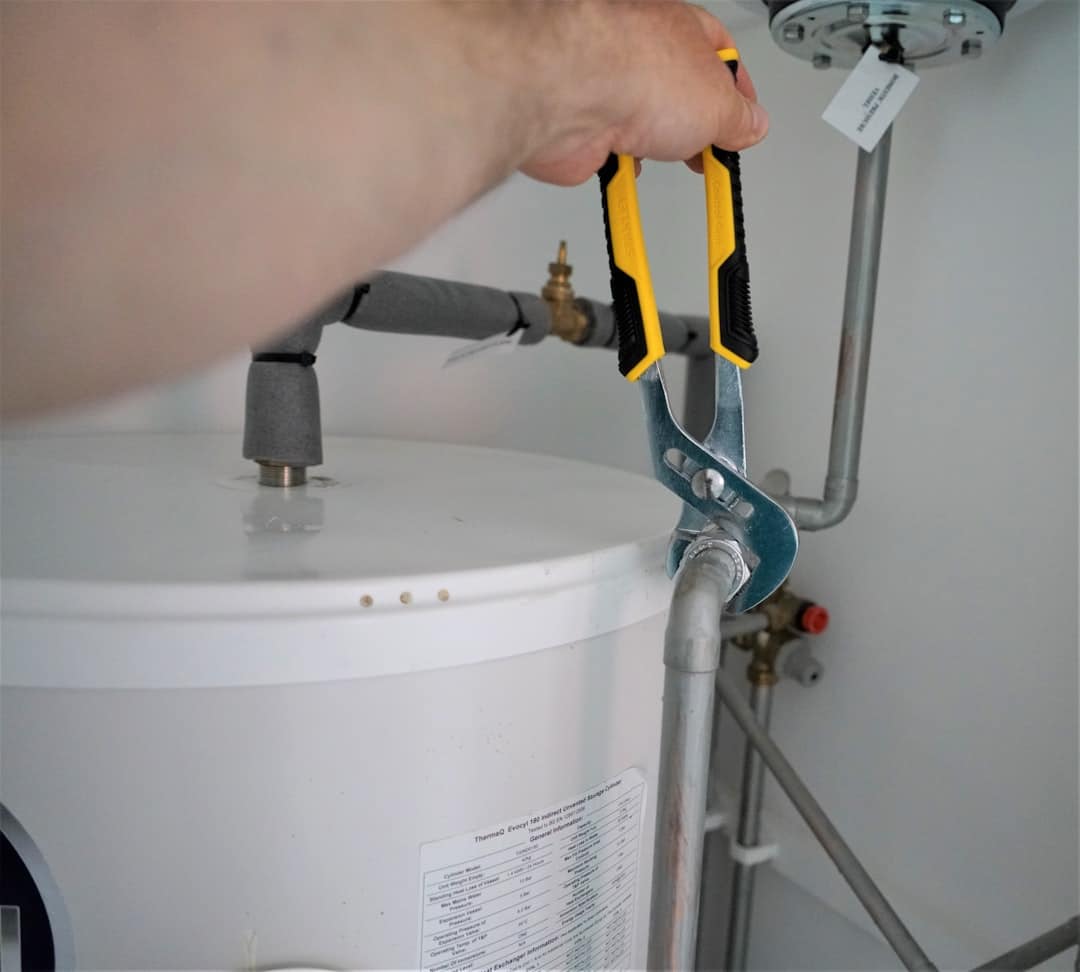
Water pooling beneath or around a water heater should never be dismissed as a minor inconvenience. Leaks can originate from several sources: loose inlet or outlet fittings, a faulty pressure relief valve, corrosion at the base of the tank, or a deteriorating drain valve. Many fitting-related leaks are repairable. However, leaking from the tank itself—rather than from external connections—typically indicates internal corrosion and usually means the unit needs full replacement rather than repair.
According to research compiled from Insurance Institute for Business and Home Safety claims data, as reported by the Pacific Northwest National Laboratory for the U.S. Department of Energy, 69% of water heater insurance claims involved a leak or burst tank, and the average water damage cost per incident reached $4,444 after the deductible. Catching leaks early and acting promptly can prevent that number from appearing on your insurance statement.
Stop That Leak Before It Gets Worse. Call MD Sewer & Plumbing now.
Could Rusty or Smelly Hot Water Signal Internal Corrosion?
Why Does My Hot Water Look Rusty or Smell Bad?
Discolored or foul-smelling water from the hot tap—while the cold water remains clear—points to a problem inside the water heater rather than in the supply line. Rust-colored water often indicates internal tank corrosion, which develops gradually as protective components wear out and allow the steel tank walls to deteriorate.
Sulfur or rotten-egg odors frequently indicate bacterial growth inside the tank, which can develop when water sits at temperatures that are too low. Both issues deserve prompt professional attention because they tend to worsen over time.
How Does a Failing Anode Rod Affect Water Quality?
Inside every traditional tank water heater is a sacrificial anode rod—typically made of magnesium or aluminum—that corrodes in place of the steel tank walls. As long as the anode rod is intact, the tank itself stays protected. When the rod deteriorates completely, however, the electrochemical process shifts to the tank and corrosion accelerates rapidly.
The National Board of Boiler and Pressure Vessel Inspectors recommends having a qualified plumber inspect and replace the anode rod every two to five years. This relatively inexpensive service is one of the most overlooked maintenance tasks in residential plumbing—and one of the most impactful for extending tank life. Research from Pacific Northwest National Laboratory identifies anode rod deterioration as the leading reason why tank water heaters eventually fail by leaking.
When the anode rod has been completely depleted for an extended period and significant corrosion has developed throughout the tank, repair is rarely a viable option. In those cases, replacement is the more reliable and cost-effective path.
What Should Maryland Homeowners Know About Gas Water Heater Problems?
Why Does the Pilot Light Keep Going Out?
Many traditional gas water heaters rely on a pilot light to ignite the burner and heat the water. A pilot light that frequently goes out—or refuses to stay lit—signals an underlying issue that simply relighting it will not solve. Common causes include a faulty thermocouple (the safety device that keeps the gas valve open while the pilot burns), a dirty pilot orifice, or a problem with the gas supply itself.
Relighting the pilot occasionally is something many homeowners can do safely by following the manufacturer’s instructions. But a pilot that goes out repeatedly deserves professional diagnosis. Continuing to relight it without addressing the root cause is not just ineffective—it can delay identification of a more serious problem.
What Should You Do If You Smell Gas?
A gas odor is a different situation from an ordinary water heater repair problem—it is an emergency. If you smell gas near your water heater or anywhere in your home:
- Leave the building immediately. Do not stop to turn off appliances or investigate.
- Do not use light switches, phones, or any electrical devices inside the home.
- Call emergency services and your gas utility provider from a safe location outside.
The U.S. Consumer Product Safety Commission (CPSC) and the National Board of Boiler and Pressure Vessel Inspectors both emphasize that fuel-burning appliances should only be serviced by individuals with the appropriate training and tools. DIY repairs on gas lines or gas-connected appliances pose serious safety risks and should never be attempted without professional qualifications.
How Do Electric Water Heater Problems Differ From Gas Issues?
Electric water heaters rely on one or two immersion heating elements submerged in the tank, controlled by thermostats that regulate water temperature. When performance drops or hot water disappears entirely, the most common causes are:
- A tripped circuit breaker cutting power to the unit
- A failed heating element that can no longer generate sufficient heat
- A faulty thermostat that prevents the heating cycle from operating correctly
- Loose or corroded electrical connections that interrupt the current supply
Because water and electricity present a genuine safety hazard when combined, homeowners should resist the urge to probe wiring, terminals, or connections without proper training. A professional technician can test each component systematically—using the correct diagnostic equipment—rather than swapping parts on a trial-and-error basis, which wastes both time and money.
MD Sewer & Plumbing technicians are equipped to accurately diagnose electric water heater problems and recommend repairs that address the actual cause rather than the most likely guess.
When Does Water Heater Repair Make More Sense Than Replacement?
What Signs Suggest the Water Heater Is Worth Repairing?
Repair tends to be the right call when:
- The unit is still relatively young—typically under eight years old
- The tank itself is structurally sound and not leaking
- The problem involves a replaceable component such as a heating element, thermostat, pressure relief valve, or anode rod
- Repair costs are reasonable relative to the cost of a new water heater and installation
- The unit has received regular maintenance and continues to meet the household’s hot-water demands
According to Rheem Manufacturing’s water heater guidance, if the water heater is over 10 years old, leaking from the tank, or has required repeated repairs, replacement is often the more cost-effective long-term decision.
How Much Does Expert Water Heater Repair Cost in Maryland?
MD Sewer & Plumbing charges an $89.95 diagnosis fee for water heater repairs. Typical repairs start at $199, with the final cost depending on the system type, the specific problem, the parts required, and the extent of the work.
Most water heater repairs take approximately two hours, though more complex jobs may take longer. Our upfront pricing approach means customers understand exactly what the recommended work involves—and what it will cost—before any repair begins. No hidden charges. No surprise invoices.
The EPA’s WaterSense program recommends hiring a professional to service your water heater at least once a year, noting that professional maintenance allows for inspection of components that homeowners are unlikely to evaluate on their own.
Request Your Free Estimate. Book online in minutes.
When Does a New Water Heater Make Better Financial Sense?
How Does the Age of a Water Heater Affect the Repair-or-Replace Decision?
Traditional tank water heaters typically last 8–12 years, with an average lifespan of around 10 years depending on water quality, usage patterns, maintenance history, and unit size. According to data compiled from Angi’s 2026 cost guides and published by RapidEye Research, the average water heater fails at 10.7 years—and 69% of those failures involve a leak. A water heater that is approaching or has passed the 10-year mark deserves a professional evaluation before another repair is scheduled.
Repeated repairs on an aging unit often cost more in total than a planned replacement would have. A corroded or leaking tank cannot be patched—it needs to be replaced. And when emergency water heater repair and replacement becomes necessary due to a sudden failure, the costs can escalate well beyond the price of the unit itself.
What Is the Difference Between Traditional and Tankless Water Heaters?
Traditional tank water heaters store a set volume of hot water—typically 40–50 gallons for most families—and maintain it at the set temperature continuously. They are less expensive upfront, widely available, and compatible with most existing plumbing configurations.
Tankless water heaters heat water on demand rather than storing it. They are significantly more energy efficient: the EPA estimates that a tankless unit uses up to 34% less energy than a storage tank model in homes using 41 gallons or less of hot water daily. Tankless units are also more compact and often last up to 20 years—roughly twice the lifespan of a gas tank heater.
The ENERGY STAR program provides certification standards for both tank and tankless water heaters, making it easier to compare efficiency ratings when choosing a replacement. MD Sewer & Plumbing can help Maryland homeowners evaluate which system type suits their household size, budget, and long-term energy goals.
What Water Heater Maintenance Can Maryland Homeowners Do to Prevent Problems?
How Often Should You Flush a Water Heater?
Flushing the water heater tank once a year removes accumulated sediment and mineral deposits that reduce efficiency and contribute to the rumbling, popping noises described earlier. In areas with harder water—which is common across parts of Maryland—more frequent flushing may be beneficial. The EPA’s WaterSense Home Maintenance guide recommends annual flushing as a standard part of responsible home maintenance.
To flush the water heatertank safely, shut off the power or gas supply first, connect a garden hose to the drain valve, and drain several gallons into a bucket or floor drain. The water that comes out will often appear brown or rust-colored—that is the sediment leaving the system.
What Should Homeowners Check for Around the Water Heater?
Periodically inspecting the area around the water heater takes only a few minutes and can prevent significant damage. Look for:
- Moisture, dripping, or water pooling around the base
- Corrosion or rust on fittings, valves, or the tank itself
- Loose connections at the inlet and outlet pipes
- Signs of damage to the pressure relief valve or its discharge pipe
The Ferguson Plumbing preventive maintenance checklist recommends testing the temperature-pressure relief valve at least once a year. To test it, lift the handle briefly—water should flow out of the discharge pipe. If it doesn’t move freely, or if it leaks after testing, a licensed plumber should replace it promptly.
What Is the Safest Water Heater Temperature Setting?
The U.S. Department of Energy and the National Board of Boiler and Pressure Vessel Inspectors both reference 120°F as the commonly recommended residential setting. At this temperature, scalding risk is significantly reduced—an important consideration for households with young children or elderly residents—while energy use is kept in check.
Some guidance recommends setting the thermostat to 140°F to suppress bacterial growth, but that temperature carries a meaningful scalding risk and typically requires mixing valves at fixtures to be used safely. The right setting depends on your household’s specific needs, usage patterns, and system type. A licensed plumber can help you determine the most appropriate temperature for your home.
Why Is Annual Professional Maintenance Worth It?
Professional maintenance goes well beyond what a visual inspection can reveal. A skilled technician checks the anode rod, inspects fittings and connections, tests the pressure relief valve, evaluates the heating system, and assesses the overall condition of the tank. Problems caught during a maintenance visit are almost always less expensive to fix than problems that surface during an emergency.
Routine maintenance can meaningfully extend water heater life, maintain efficiency, and give homeowners advance notice when replacement is approaching—rather than leaving them without hot water on a Sunday morning.
Protect Your Home from Costly Plumbing Repairs. Schedule maintenance with MD Sewer & Plumbing.
Why Do Maryland Homeowners Choose MD Sewer & Plumbing for Water Heater Repair?
Since 1989, MD Sewer & Plumbing Services has been the trusted name in plumbing for homeowners and businesses across Pasadena and the surrounding Maryland communities. As a family-owned company, we approach every service call the way a good neighbor would—honestly, thoroughly, and without unnecessary upselling.
Here is what sets our water heater repair service apart:
- 35+ years of experience diagnosing and repairing water heaters across Maryland
- Licensed, skilled technicians trained to work on all major brands
- Gas, electric, propane, traditional tank, and tankless systems—we handle them all
- Upfront pricing with no hidden fees and no surprises on the final invoice
- 24/7 emergency availability for urgent water heater failures
- Water heater installation services when repair is no longer the right answer
- Free estimates and easy online scheduling to make the process as convenient as possible
Our customers consistently describe our technicians as professional, knowledgeable, and straightforward about what needs to be done. We explain the diagnosis in plain language, present options clearly, and let you decide how to proceed. That approach has kept Maryland families calling us back for more than three decades.
Experience the Difference of Family-Owned Service. Book online or call now.
Restore Your Hot Water with Maryland’s Trusted Plumbing Experts
Water heater problems rarely improve on their own. A minor leak becomes a major one. A struggling heating element fails completely. A tank that has been showing signs of wear for years finally gives out—often at the worst possible moment. The warning signs are worth paying attention to: no hot water, fluctuating temperatures, popping or rumbling noises, moisture around the unit, rusty or foul-smelling water, a pilot light that won’t stay lit, or a system approaching the end of its expected lifespan.
Timely water heater repair restores comfort, protects your property, and gives you a clear picture of whether your current unit still has useful life remaining. When repair is no longer the right choice, MD Sewer & Plumbing provides professional water heater installation—any brand, any system type—with the same honesty and quality you have come to expect from a trusted local plumbing company.
Schedule Your Service Today. | Call Now — Technicians Available 24/7. | Book Online in Minutes.
Your Local, Trusted Plumber Since 1989. Contact MD Sewer & Plumbing.
Frequently Asked Questions: Water Heater Repair in Maryland
What is the average cost to repair a water heater in Maryland?
MD Sewer & Plumbing charges an $89.95 diagnosis fee, with typical water heater repairs starting at $199. The total cost varies based on the type of water heater, the specific failed component, required parts, and the scope of work involved. According to Angi’s 2026 pricing data, water heater repair costs nationally average around $615, with a typical range of $228 to $1,017. Customers receive a clear, upfront price before any repair work begins. For older or severely corroded units, replacement may prove more cost-effective than continued repairs.
What is the most common problem with a hot water heater?
Sediment buildup is one of the most frequently cited causes of water heater trouble and premature failure. As minerals accumulate at the bottom of a tank-style unit, they reduce efficiency, create strain on the heating system, and produce the popping and rumbling sounds many homeowners notice. Other common problems include failed heating elements, thermostat issues, pilot light failure, loose fittings, minor leaks, and anode rod deterioration. Annual flushing and routine professional maintenance can reduce sediment accumulation and help identify developing problems before they become emergencies.
Is it worth repairing a hot water heater?
Repair generally makes sense when the unit is under 8–10 years old, the tank is structurally sound, and the problem involves a repairable component such as a thermostat, heating element, or pressure relief valve. Replacement becomes the smarter financial decision when the tank itself is leaking, corrosion is extensive, the unit has passed its expected lifespan, or repair costs are high relative to the price of a new system. Comparing repair cost, unit age, efficiency, condition, and remaining reliability will help clarify which option offers better long-term value.
What is the average lifespan of a hot water heater?
Traditional tank water heaters typically last 8–12 years, with most units averaging around 10 years of reliable service. According to RapidEye Research, drawing from Insurance Institute for Business and Home Safety claims data, the average age at failure is 10.7 years. Water quality, usage volume, maintenance history, and sediment control all influence how long a unit lasts. Routine flushing, professional inspections, and prompt repairs can extend reliable service life—but units approaching or past the 10-year mark should be evaluated by a licensed plumber before another significant repair is invested in them.
Can MD Sewer & Plumbing repair any brand of water heater?
Yes. MD Sewer & Plumbing technicians are trained to diagnose and repair all major water heater brands, including both traditional tank and tankless systems fueled by gas, electricity, or propane. When repair is not the right answer, the MD Sewer & Plumbing team also provides professional water heater installation services for Maryland homeowners and businesses.
How do I know if my water heater needs repair or replacement?
If the unit is under 8–10 years old, the tank is not leaking, and the problem involves a single component, repair is usually the appropriate first step. If the tank is actively leaking, corrosion is visible on the tank body, the unit is past its expected lifespan, or multiple components have failed in a short period, replacement typically offers better reliability and value. A professional diagnosis—MD Sewer & Plumbing charges $89.95 for water heater diagnostics—gives you the information needed to make a confident decision without guessing.